

1. A Promising Feature With Big Expectations
Samsung’s Galaxy Watch blood pressure monitoring sounds like a breakthrough feature on paper. The idea of checking your blood pressure directly from your wrist—without bulky equipment—feels like a major step forward in wearable health tech. With rising awareness around heart health, this feature promises convenience and continuous tracking.
However, once you go beyond the marketing, the real-world experience doesn’t quite live up to expectations. While the feature is innovative, it still feels more like an experimental wellness tool than a reliable health solution.
2. How the Feature Actually Works
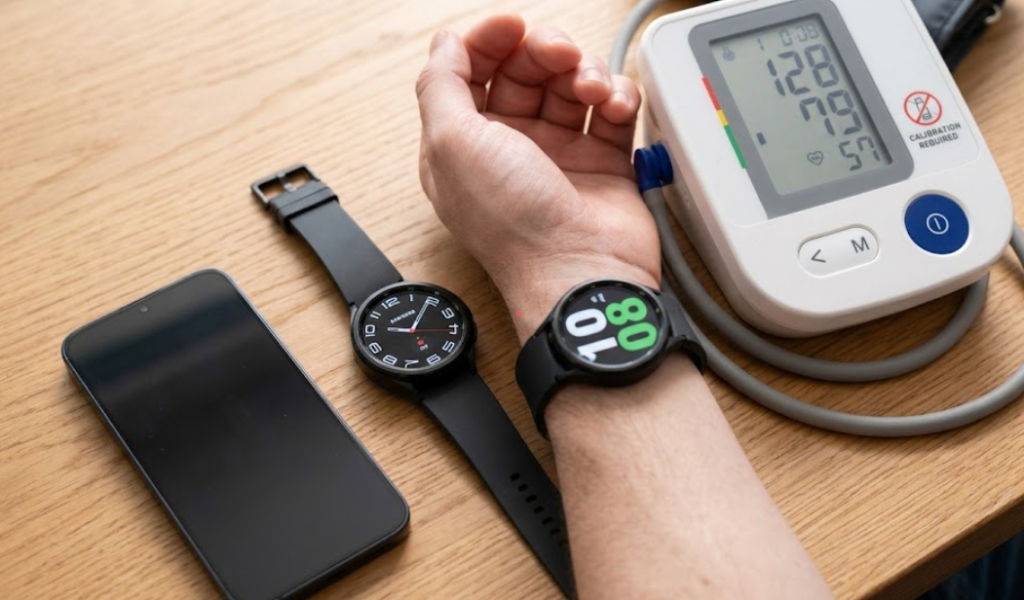
Unlike traditional blood pressure monitors, the Galaxy Watch doesn’t directly measure pressure in your arteries. Instead, it uses optical sensors to analyze pulse wave patterns and estimate your systolic and diastolic readings.
To make this work, users must calibrate the watch using a standard upper-arm blood pressure cuff every 28 days. This means you still need a traditional device to get started—and to maintain accuracy over time.
In essence, the watch relies on approximations rather than real-time medical-grade measurements, which already raises questions about reliability.
3. Accuracy Is the Biggest Concern
The biggest issue with Samsung’s approach is accuracy. Blood pressure is a highly variable metric affected by stress, posture, caffeine, and even minor daily changes.
Because the watch provides estimates rather than direct readings, the results can sometimes be inconsistent or misleading. Even Samsung positions the feature as a wellness tool rather than a diagnostic one, meaning it’s not designed for medical use.
For users who need precise monitoring—such as those managing hypertension—this limitation makes the feature far less useful than it initially appears.
4. Convenience vs. Practical Value
At first glance, wrist-based monitoring seems far more convenient than using a traditional cuff. But the need for regular calibration reduces that advantage significantly. If you already need a cuff every few weeks, it raises a fair question: why not just use the cuff directly for accurate readings?
Additionally, factors like watch fit, movement, and sensor contact can further impact readings, making the experience less dependable in everyday use.
That said, the feature does have some value—it can help track general trends over time and give users a rough idea of their cardiovascular health.
5. Final Verdict: Not Ready to Replace Medical Tools
Samsung’s Galaxy Watch blood pressure feature is an interesting step toward more advanced health tracking, but it’s not a replacement for proper medical devices.
While it offers convenience and trend tracking, its reliance on estimates, frequent calibration, and inconsistent accuracy make it hard to fully trust. For casual users, it might be a nice extra feature—but for anyone serious about monitoring their blood pressure, traditional methods remain the better choice.
In its current form, this feature feels more like a glimpse of the future than a finished, dependable tool.
Read Also: Tim Cook to Step Down as Apple CEO
News Source: Pcmag.com
Leave a Reply