

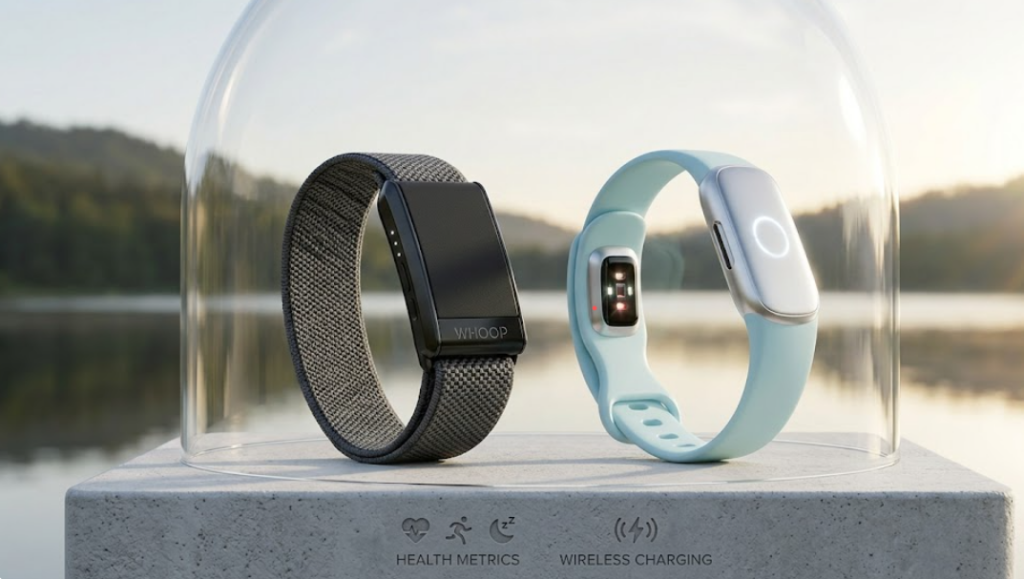
Google appears to be preparing a new wearable under its Fitbit lineup—and it’s very different from its recent smartwatches. Early reports suggest this upcoming device, likely called the Fitbit Air, is designed to compete directly with Whoop, a brand known for its screenless fitness bands focused on recovery and performance tracking.
Instead of adding more features and screens, Google is going in the opposite direction—removing the display entirely.
A Screenless Design Focused on Data, Not Distraction
The biggest change with the rumored Fitbit Air is its lack of a screen. Unlike traditional smartwatches or fitness trackers, this device is expected to work quietly in the background, collecting health data without constant interaction.
This approach mirrors the philosophy behind Whoop devices, which prioritize metrics like sleep, recovery, and strain rather than notifications or apps. The idea is simple: wear the device all day, and review your health insights later through a smartphone app.
For users overwhelmed by screens, this could be a refreshing shift—less distraction, more focus on long-term health.
Inspired by Athletes and Minimalist Wearables
The device has already been teased publicly, most notably through appearances on athlete Stephen Curry, who has been seen wearing a sleek, fabric-style band without a display.
This suggests Google is targeting serious fitness users and athletes—people who care more about performance data than smartwatch features.
The design also hints at a return to Fitbit’s roots. Early Fitbit devices were simple trackers that focused on steps and activity, and this new product seems to bring that philosophy into a more advanced, data-driven era.
AI and Subscription Features Could Play a Big Role
While the hardware may be minimal, the software is expected to be much more advanced. Reports suggest the Fitbit Air could integrate AI-driven insights and possibly tie into a revamped subscription model.
Google has already been investing in AI-powered health coaching through its ecosystem, which could allow the device to deliver personalized recommendations based on your activity, sleep, and recovery patterns.
This would align with the broader trend in wearables: simpler devices paired with smarter apps.
Why Google Is Changing Strategy
The shift toward a screenless tracker reflects a bigger change in the wearables market. Many users no longer want another screen on their wrist—they want meaningful insights without constant interruptions.
By focusing on passive tracking and deeper analytics, Google is positioning Fitbit to compete in a growing niche dominated by Whoop and similar devices.
It’s also a strategic move to differentiate from smartwatches like the Pixel Watch, which already cover notifications, apps, and everyday smartwatch functions.
What We Still Don’t Know
Despite the growing number of leaks, key details remain unclear:
- Pricing and release date
- Full list of health metrics and sensors
- Whether a subscription will be required
- Battery life and durability
These factors will ultimately determine whether the Fitbit Air becomes a serious competitor—or just another experimental device.
Final Thoughts
The Fitbit Air could mark a turning point for Google’s wearable strategy. By stripping away the screen and focusing on health data, it aims to offer a more focused, distraction-free experience.
If done right, it won’t just compete with Whoop—it could redefine what people expect from fitness trackers in the years ahead.
You may like: Samsung’s Project Luna
News Source: PCmag.com
Leave a Reply