

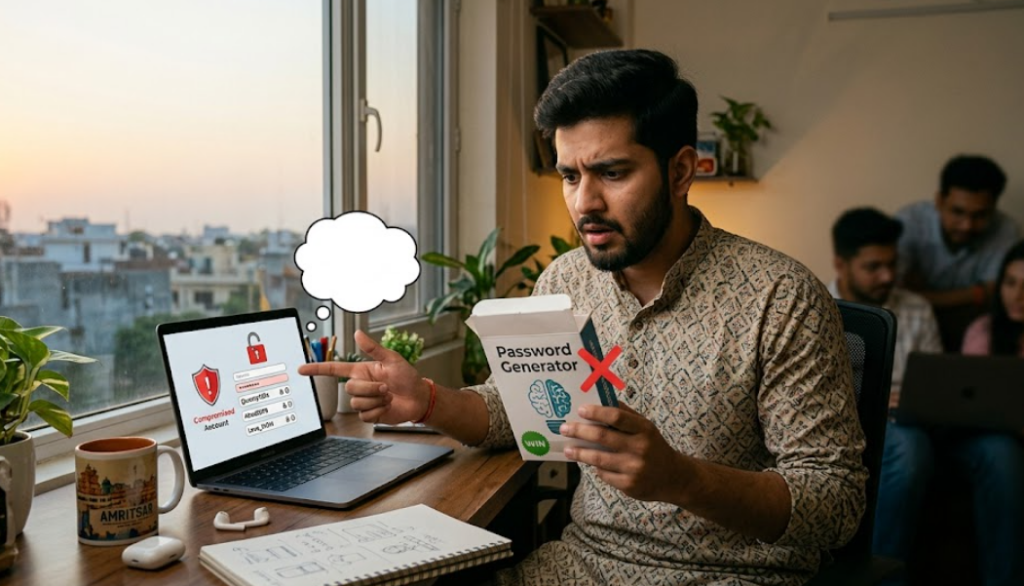
At first glance, asking AI to generate passwords seems like a smart shortcut. Tools powered by artificial intelligence can quickly produce strings filled with uppercase letters, numbers, and symbols—exactly what security guidelines recommend. For users tired of coming up with strong passwords, this feels like an easy solution.
But as PCMag’s experiment reveals, what looks secure on the surface can be deeply flawed underneath.
The Hidden Problem: Predictability
The biggest issue with AI-generated passwords is that they aren’t truly random. Unlike dedicated password generators that rely on cryptographic randomness, AI models work by predicting patterns based on training data.
This means the passwords they create often follow similar structures—like starting with certain letters or placing symbols in predictable positions. Security researchers have found that many AI-generated passwords share repeating patterns or even duplicate outputs.
In one analysis, some passwords appeared multiple times across different generations, proving that the randomness users expect simply isn’t there.
Why “Complex” Doesn’t Mean Secure
A password can look complicated and still be weak. AI-generated passwords often pass basic strength tests because they include a mix of characters. However, these tests only measure surface complexity—not true unpredictability.
Studies show that AI-generated passwords have much lower entropy (a measure of randomness) compared to properly generated ones. In some cases, they can be cracked far more quickly than expected using modern attack methods.
This creates a dangerous illusion: users believe their accounts are protected, when in reality, attackers can exploit predictable patterns to guess passwords more efficiently.
Real Security Risks You Shouldn’t Ignore
Using AI-generated passwords can expose users to serious cybersecurity threats. Because these passwords are easier to predict, they are more vulnerable to brute-force attacks and advanced guessing techniques.
Experts warn that relying on AI for password creation increases the risk of unauthorized access to sensitive accounts like email, banking, or work systems.
Even more concerning, attackers can study how AI models generate text and use similar techniques to narrow down possible password combinations—making breaches faster and more effective.
What You Should Do Instead
If AI isn’t the answer, what is? Security experts strongly recommend using dedicated password managers. These tools generate passwords using cryptographically secure random number generators, ensuring true unpredictability.
Other best practices include:
- Using long, unique passwords for every account
- Enabling two-factor authentication (2FA)
- Avoiding reuse of passwords across multiple services
These methods may require a bit more effort, but they provide far stronger protection than relying on AI-generated guesses.
Final Verdict
The experiment makes one thing clear: AI-generated passwords are not as safe as they seem. While they may look complex, their underlying predictability makes them a risky choice for protecting your accounts.
AI is powerful, but when it comes to security, randomness matters more than convenience. If your digital safety is important—and it should be—this is one shortcut you’re better off avoiding.
You may like: MacBook Neo vs. Chromebook Plus
News Source: Pcmag.com
Leave a Reply