

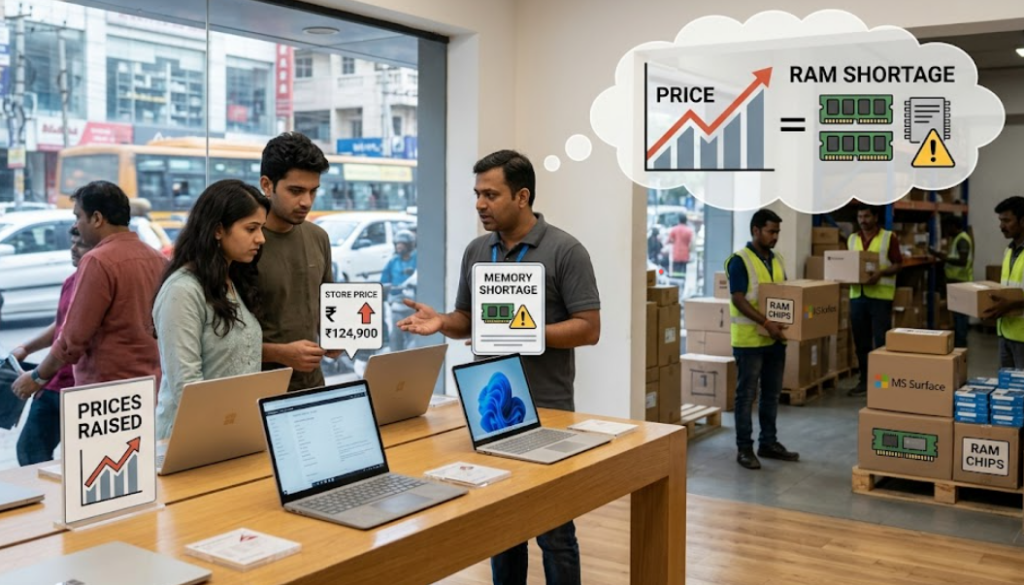
Microsoft has implemented a major hardware price adjustment by raising its Surface Laptop and Surface Pro product prices. The devices that started at lower price levels have experienced price increases that exceed $300. The models that used to sell for $999 now have a price of $1,499 which shows a significant price rise that has occurred during the past two years.
The new lower-cost models have also experienced price increases that signal a universal price trend across all products. The entry-level Surface devices now face pricing increases which demonstrate that the entire product range has price changes that affect all configurations including premium models.
The RAM Shortage Driving Costs Up
Price increases happen because of a worldwide shortage of memory components. The ongoing crisis has led to rising costs for essential components like DRAM and NAND storage, which are critical for modern laptops. The AI infrastructure demand which grows rapidly has created a memory supply shortage that affects most global memory resources.
Microsoft and other manufacturers now must deal with major cost increases for their manufacturing processes. The company chose to transfer part of these increased costs to its customers. Microsoft said that memory and component cost increases have caused the company to increase its prices.
How Much Prices Have Increased
The price increases affect multiple product lines through significant price increases. The Surface Laptop 7 and Surface Pro 11 now enter the market with starting prices of $1,499 which represents a price increase of roughly $500 from their initial launch price.
Other models have also seen similar jumps:
Smaller Surface devices have increased by roughly $200–$300
Mid-range models now sit firmly in premium territory
High-end configurations can exceed $3,000
The price increases show an industry-wide pattern which shows that rising component prices are forcing laptops into higher pricing ranges.
Impact on Competition and Consumers
Microsoft faces more difficult challenges in the market because of its new pricing structure which harms its ability to compete with Apple. The MacBook Air now looks better to customers because it provides excellent performance at low price levels.
The premium laptop market now offers less affordable products for consumers to select from. The Surface devices which buyers used to choose for their design and performance advantages now require market changers to either increase their spending limits or select products made by competing companies.
The rising memory prices will cause budget users to face more serious problems because memory costs will rise through the entire PC industry which will end up destroying budget laptops in upcoming years.
A Broader Industry Shift
Microsoft make this decision to improve their business operations which they perform without requiring other companies to change their operations. The total technology sector faces supply problems which restrict the operations of all companies. Laptop prices will experience major price increases because memory and storage prices continue to increase according to analyst predictions.
The market now shows evidence of shifting to a new path. The growing resource requirements of AI technology will make consumer devices more expensive while creating barriers for customers who want access to these products. Manufacturers must find ways to create new products at affordable prices while customers will decide to keep their products longer instead of making regular upgrades.
Conclusion
Microsoft’s decision to increase Surface product prices results from the direct effects of the worldwide memory shortage problem. The premium product range which the company once considered a competitor now moves further into the high-end market because of market forces which the company cannot manage.
The ongoing RAM shortage will lead to price increases that Microsoft and all laptop manufacturers will implement which will make it vital for customers to choose their device purchases based on both value and timing.
You may like: The 2026 RAM Crunch Explained
News Source: PCmag.com
Leave a Reply